
Veteran physicist Professor Umesh V Waghmare has been appointed as the Secretary of the Department of Science and Technology. Currently a professor at JNCASR, Bengaluru, his appointment was approved by the Appointments Committee of the Cabinet. He succeeds Professor Abhay Karandikar and brings a distinguished academic background from IIT-Bombay, Yale, and Harvard to the role.

Atomic Energy Commission chairman Ajit Kumar Mohanty stated that India is on the verge of a significant technological transformation, driven by advancements in AI, quantum technologies, and other fields. Speaking at BIT Mesra's convocation, he emphasised the need for strong indigenous capabilities, skilled professionals, and interdisciplinary collaboration to achieve a developed India. Other speakers, including BIT Mesra's Chancellor and Vice Chancellor, echoed the importance of continuous learning and contributing to national progress.
West Bengal has launched an Emerging Quantum and Semiconductor Technologies (EQST) section at CSIR-CGCRI to attract investments and position the state as a hub for next-generation technology. Minister Kalyan Chakraborti highlighted India's need to invest in these crucial sectors and outlined the state's plans to collaborate with institutions and leverage budget initiatives to foster research and start-ups.
Government of India Department of Science & Technology announces Boyscast Fellowship 2009-10.
Researchers at BRIC-RGCB in Thiruvananthapuram have developed a novel nanopore-based sensing technology. This innovation allows for the early and highly sensitive detection of biomarkers associated with neurodegenerative diseases like Parkinson's and ALS, addressing a critical challenge in current diagnostic methods. The technology, published in Nature Nanotechnology, uses self-assembling dual-diameter nanopore sensors to identify disease-specific biomarkers even at low concentrations.
Researchers at IIT-ISM Dhanbad have been granted an Indian patent for an electrochemical reactor designed to recover copper from industrial wastewater. This innovative technology offers an environmentally sustainable solution for resource recovery and wastewater treatment, particularly benefiting the mining and metallurgical sectors.
Four faculty members from Nagaland University have been named among the world's top 2 per cent scientists for their significant research contributions, according to an annual database by Elsevier and Stanford University. Three of them also feature in the Career-Long Top 2 per cent Scientists list, highlighting the university's growing global research impact across various scientific disciplines.
A new MoU between the Centre for Cellular and Molecular Platforms (C-CAMP) and Imperial College London has paved the way for deepening India-UK ties in the life sciences sector.
The ICAR-Central Institute of Fisheries Technology (ICAR-CIFT) has secured an Indian patent for a novel technology designed to make live fish and aquatic animal transport safer and more efficient without the use of chemicals. This innovative system employs controlled hypothermic anaesthetisation, gradually cooling aquatic animals to prevent shock and improve survival rates during transit, offering a practical and affordable solution for the seafood industry.
The Indian Institute of Technology, Delhi, has launched a comic-style brochure featuring Professor Padarth to make materials engineering more accessible and engaging for students and the general public.

The IIT Bombay Faculty Forum has expressed strong solidarity with Professor Suryanarayana Doolla, who was invigilating an exam where a student was found using a smartphone, an incident preceding the student's death by alleged suicide.
The umbrella Science and Technology agreement is part of the series of pacts aimed at bringing the two countries together in areas such as health, space and information technology.
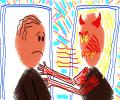
'My biggest fear about AI is that humans are going to rush to deploy it before AI is ready.'

The Trinamool Congress has lost the chairpersonship of two significant Parliamentary panels following a reconstitution by Rajya Sabha Chairman C P Radhakrishnan and Lok Sabha Speaker Om Birla. This development comes after a split in the TMC, with rebel MPs joining the Nationalist Citizen Party and supporting the NDA. The TMC has strongly criticised the move, alleging that Parliament is being turned into a 'deep, dark chamber' due to their exclusion from committee leadership.

An Indian-origin engineer couple, Anuradha and Vikas Sinha, have donated $20 million to the University of North Texas (UNT) to establish the Anuradha and Vikas Sinha College of Artificial Intelligence and Advanced Analytics. This significant gift aims to create new opportunities for students and faculty, focusing on building and deploying intelligent systems and understanding their operation within human contexts. The donation underscores the couple's belief in education and immigrant contributions to the American dream, supporting leadership, scholarships, professorships, research, and entrepreneurship.
NIT Rourkela has announced the launch of four new academic programmes for the 2026-27 session, focusing on emerging technologies such as semiconductors, artificial intelligence, and quantum technologies.

Sikkim has identified 40 high-hazard glacial lakes, with 16 at the highest risk of catastrophic outbursts. Following a devastating GLOF in 2023, the state is developing India's first dedicated GLOF Risk Mitigation Protocol, using advanced monitoring and interdisciplinary approaches to protect downstream settlements and serve as a model for other Himalayan regions.

SCTIMST and Invasive Technologies have launched "Chitra Core," a new drug-eluting coronary stent designed with significantly less metal to reduce complications. This indigenous innovation, developed in collaboration, aims to provide advanced and cost-effective cardiac care, building on decades of Indian medical device development. The institute is also developing a unique TiN-coated stent for global markets.

IIT Bombay has begun replacing ceiling fans with wall-mounted fans in its hostels following the recent death by suicide of a second-year B Tech student, Sahil Wakode. This move, which has drawn criticism from an NCP (SP) spokesperson, comes after a previous student suicide in July and aims to address the broader issue of student mental health and suicide prevention on campus.

The Kerala Crime Branch has arrested Raveendran Nair, former caretaker of Jayamadhavan Nair, for his murder nine years ago. The investigation, initially treated as an unnatural death, gained momentum through forensic evidence, contradictory statements, and a forged will, leading to the unravelling of a property dispute motive.

The mother of Sahil Ravindra Wakode, a 22-year-old IIT Bombay student found dead in his hostel room, has alleged her son was "tortured" and "killed," demanding justice, while the institute stated no disciplinary action was initiated against him after he was found using a mobile phone during an exam.

There is no answer to the question of how IN-SPACe invited EOIs for ISRO's mature rockets and whether it was based on any government policy decision.

The Crime Branch has taken over the investigation into the alleged suicide of a 22-year-old IIT Bombay student, Sahil Ravindra Wakode. Wakode was found dead after being caught using a mobile phone and ChatGPT during an exam. His parents have filed a complaint alleging institutional harassment and caste-based discrimination, leading to a protest by students. A professor has been named as an accused, and the Crime Branch is expected to summon them for questioning. This marks the third suicide at IIT Bombay in seven months.
'There is a long set of decisions that have to be made along the way for anything to actually get actuated in the real world.'

Researchers at IIT Indore have developed HGAST, an AI tool designed to correct gender-specific errors in translations from English to Hindi, Marathi, and Gujarati. The tool acts as a correction layer, identifying and rectifying masculine verb forms often used by AI systems when translating female speech, significantly improving accuracy for female speakers without retraining existing models.

Six faculty members from IIT Madras have been awarded the prestigious ANRF J C Bose Grant, recognising their outstanding research contributions in engineering and science. The highly competitive grant provides Rs 25 lakh annually for five years to support frontier research.

Prime Minister Narendra Modi shared a nostalgic moment with former Australia captain Steve Waugh during a visit to the Melbourne Cricket Ground (MCG) on Friday, presenting him with a photograph from their first meeting more than two decades ago when Modi was the Chief Minister of Gujarat.

The father of an IIT Bombay student who died by suicide has alleged that his son faced relentless caste-based mocking and torture from a professor and the administration. A police complaint has been filed, and an FIR registered against a professor for abetment of suicide and under the SC/ST Act. IIT Bombay has removed a Dean from his post following the allegations.
The Haldwani forest division has launched India's first AI-based forest acoustic surveillance system. This innovative technology uses AI, acoustic sensors, and long-range wireless communication to detect illegal logging, poaching, and other suspicious activities in real-time, even in remote areas. Powered by solar energy, the system provides continuous monitoring, significantly enhancing forest protection, wildlife conservation, and biodiversity monitoring efforts.

The Mumbai Police has transferred the alleged suicide case of a second-year IIT Bombay BTech student to the Crime Branch after his father filed a complaint alleging casteist slurs and harassment by Professor Suryanarayan Dulla, who was also named in an FIR.
Dr Komal Verma Saluja, a final-year student at Government Medical College Kota (GMCK), has been awarded the "Researcher of the Year Award 2026" by the India chapter of the American College of Physicians (ACP). She is the youngest and first medical student to receive this prestigious accolade. Saluja's research includes identifying an imaging biomarker for early cognitive decline in type 2 diabetes and developing a diagnostic method for fatty liver disease using echocardiography. Her achievements have brought pride to GMCK and highlight the need for more novel diagnostic and therapeutic research in India.

The parents of IIT Bombay student Sahil Wakode, who died by suicide, spent eight hours at the Mumbai Crime Branch office, while Union Minister Ramdas Athawale visited IIT Bombay, seeking a thorough investigation into the death and alleging potential caste discrimination.

Students at IIT Bombay are demanding 'meaningful institutional reforms' and greater accountability following the death of Sahil Wakode, a second-year B Tech student. While condemning academic misconduct, students highlight systemic issues and have submitted a comprehensive set of demands to the Director, who has agreed to implement them. The protest also addresses the removal of Dean Suryanarayana Doolla during an investigation into alleged abetment to suicide and caste discrimination, emphasising the need for an independent probe.

Climate scientist Tapio Schneider advocates for expanding early warning systems beyond rainfall events to include other disaster triggers like flash floods, citing the recent Nepal floods. He highlights the inevitability of 1.5 degrees Celsius global warming and discusses the role of advanced climate modelling and AI in improving predictions and research, particularly for regions like India.

A made-in-China humanoid robot, Tiangong Ultra, has shattered Usain Bolt's 100-metre sprint world record, completing the distance in 8.64 seconds compared to Bolt's 9.58 seconds. While a significant technological advancement, experts note the robot's running style differs greatly from humans, highlighting both its strengths in speed and areas where it still lags, such as decision-making and perception.

IIT Bombay has removed Suryanarayana Doolla, Dean of Administrative Affairs, from his post and issued a public apology following the death by suicide of 22-year-old student Sahil Wakode, who his parents allege faced caste-based discrimination.
Shoolini University has launched a Centre for Robotics and AI in collaboration with Sirena Technologies to provide students with industrial-grade robotics training and bridge the gap between academia and industry.

IIT Delhi has reconstituted the external probe panel investigating the death of an MSc Physics student, appointing retired Delhi High Court judge Mukta Gupta as its head. This decision follows the recusal of the previous chair, Ashok Kumar, and ongoing student protests on campus. The panel includes medical experts and student representatives to examine the circumstances of the alleged suicide.
Karnataka Chief Minister D K Shivakumar met with AI major Anthropic to discuss a long-term partnership aimed at accelerating AI adoption across governance, education, healthcare, research, and the state's startup ecosystem. The collaboration focuses on deploying AI solutions responsibly, ensuring data privacy, and developing AI-focused skilling programmes and an AI University.

All five Indian teenagers who competed at the International Physics Olympiad 2026 won gold medals; thanks to their achievement, India shared the world No 1 ranking with China, Kazakhstan, Russia, South Korea and Taiwan.
